





Philadelphia Police Caught on Tape Beating Suspects

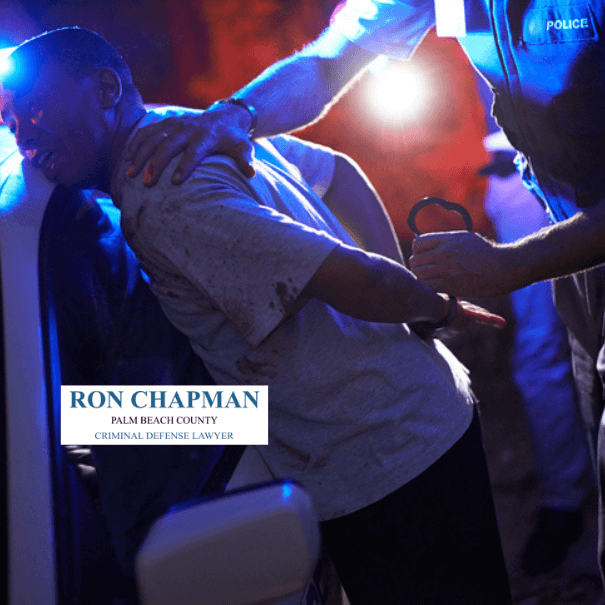
Just in case you thought that police beatings stopped with Rodney King, check out this videotape recording which shows numerous Philadelphia police officers pulling suspects out of a car and then repeatedly kicking and hitting them while at least one police dog stands nearby, straining at his leash.

Top 20 Death Penalty States

According to the Death Penalty Information Center, Texas leads all other states in the total number of individuals that it has executed since 1976.  The breakdown is as follows:

1.  Texas:  405

2.  Virginia:  98

3.  Oklahoma:  86

4.  Missouri:  66

5.  Florida:  64

6.  North Carolina:  43

7.  Georgia:  40

8.  Alabama:  38

9.  South Carolina:  37

10.  Louisiana:  27

11.  Arkansas:  27

12.  Ohio:  26

13.  Arizona:  23

14.  Indiana:  19

15.  Delaware:  14

16.  California:  13

17.  Illinois:  12

18.  Nevada:  12

19.  Mississippi:  8

20.  Utah:  6


What is particularly troubling about the fact that Texas has executed more than four times the number of individuals executed by Virginia--the second state on the list--is that Texas currently accounts for fourteen percent of the estimated 216 DNA-based exonerations in the United States.  And Dallas County, with seventeen exonerations from genetic testing, tops every other local jurisdiction in the U.S. since 2001.

Wife Convicted of Involuntary Manslaughter After Falsely Accusing Her Husband of Murder

Unfortunately, we are often inclined to automatically believe the accusations that others make without first checking out their story.  The inevitable result is that we are sometimes duped into believing false accusations.  When false accusations are made in the criminal justice system, the consequences can be devastating.  Fortunately for a man in Texas, an accusation of murder lodged against him by his wife was discovered to be false before he had to stand trial.  He was fortunate.  Some are not.  What follows is a brief recounting of his story.

Tracy Denise Roberson convicted of involuntary manslaughter

7:21 PM CDT, May 2, 2008 

FORT WORTH, Texas - A Texas woman who caused her lover's shooting death by falsely crying rape was convicted Friday of involuntary manslaughter.

Tracy Denise Roberson, 37, cried a bit when the verdict was announced. The punishment phase was set for Monday, and she faces two to 20 years in prison.

In late 2006, Darrell Roberson came home from a late-night card game to find his scantily clad wife with another man in a pickup truck in the driveway. Tracy Roberson was with her lover but cried rape, and her husband fired four shots into the truck as Devin LaSalle drove off, killing him.

Darrell Roberson initially was arrested, but a murder charge was later dropped and a grand jury indicted Tracy Roberson instead.

During her three-day trial, defense attorneys called no witnesses but blamed LaSalle's death on Darrell Roberson's jealousy and rage.

But prosecutors placed all the blame on Tracy Roberson, showing evidence of the affair with LaSalle, 32, and a text message in which she invited him to her house that evening.

19 Types of Drug Paraphernalia in Florida

According to Florida law, the term "drug paraphernalia" includes many different types of devices that can be used to consume or to make controlled substances such as cocaine, marijuana, and hashish.  This article contains a list of 19 such devices.

1.  Scales and balances used to weigh or measure controlled substances.

2.  Blenders, bowls, spoons, and mixing devices used to make controlled substances.

3.  Capsules, balloons, and envelopes that are used for packaging small amounts of controlled substances.

4.  Syringes and needles that are used to inject controlled substances into the human body.

Objects used or designed for use in ingesting or inhaling controlled substances into the human body including:

5.  Metal or wooden pipes.

6.  Water pipes.

7.  Smoking masks.

8.  Roach clips.

9.  Miniature cocaine spoons.

10.  Carburetor pipes.

11.  Electric pipes.

12.  Air-driven pipes.

13.  Bongs.

14.  A "cracker" which is a small metal or plastic device that contains a pin that may be used to expel nitrous oxide from a container.

15.  A "whip-it" which is a device that may be used to expel nitrous oxide.

16.  A tank.

17.  A hose or tube.

18.  A 2-liter-type soda bottle.

19.  Duct tape.

Given the fact that I drink quite a bit of soda from 2-liter soda bottles, number 18 on the list causes me a little concern.

Hometown News: Murder trial ends in sentences for two defendants

The following story appeared April 25, 2008 in the Palm Beach County edition of Hometown News:

By Michelle Gentile
Staff writer

JUPITER — A co-defendant in the shooting trial of a 21-year-old Jupiter man arranged a plea deal with prosecutors and testified against the man who the jury considered the principal in the murder.

Both defendants in the murder case of Denny Rowland paid a price.

In a trial that began April 7, Zachary Zeman was found guilty of first-degree murder and three other serious felonies last week.

The other co-defendant, Rikardo Alvarenga, pleaded guilty to second-degree murder and will spend his 20s, and most of his 30s, in jail for a mistake that he said leaves him crushed and remorseful.

“He’s so very sorry Denny died that night and that this ever happened,” said Ron Chapman, Mr. Alvarenga’s attorney. “It has wreaked havoc on all the families involved and it’s just a tragedy.”

Mr. Alvarenga was sentenced to 20 years in prison last week, and since he has already served two years, that will make him eligible for parole when he is around 37.

“I don’t blame Ricky,” said Charla Las Casas, Mr. Rowland’s mother who testified against Mr. Zeman last week. “I knew Ricky didn’t have the heart to do this to my kid. He was forced by gunpoint.”

On the night of Feb 10, 2006, a trip to collect some money turned into homicide.

Police reports showed that Mr. Zeman and Ricky Alvarenga went to the home of Mr. Rowland to collect $140, reimbursement for a hotel room. While they were there, the two forced Mr. Rowland into his Jupiter home that he shared with his mother and brother, Joey, and demanded the money.

Ms. Las Casas was ordered, at gunpoint, to kneel with her head down but saw what transpired.

“It happened so quick. My thoughts were twirling and I knew who shot Denny. I knew who put the gun to my face and it was Zach,” said Ms. Las Casas.

During trial, there was confusion about who actually pulled the trigger.

Police reports, testimony and, ultimately, and the 12- panel jury indicated Mr. Zeman was the principal in the murder.

Also discussed during trial was the gun’s ownership.

The gun used to shoot Mr. Rowland was stolen from a Tampa man and Mr. Zeman had moved from Palm Beach County to Tampa.

Last words

“Mom, I think you need to call 911,” Mr. Rowland told his mother as he lay bleeding on the kitchen floor.

The bullet had entered into his right armpit, cleared through his right lung and severed his aorta. It came out his left lung, which is why he could not breathe, said Ms. Las Casas.

“What a horrific tragedy, as I watched my son get shot, and I sat with him, struggling to breathe, I knew from my nursing background he had only seconds to live,” she read to the judge during the victim’s impact statement.

Mr. Zeman shouted out, “What about what your son did to me? He shot me.”

Circuit Judge Jorge Labarga called a recess following her statement. Before the verdict was read, he cautioned spectators about any outbursts or “be arrested on the spot.”

Over the last two years, while in jail, Mr. Alvarenga and Mr. Zeman have been in altercations.

At one brief stint in the courthouse last year, Mr. Zeman jumped over a guard and attacked Mr. Alvarenga.

“As they were coming to court one day, Mr. Zeman hit him and as he walked into the courtroom it was obvious he was bruised,” said Mr. Chapman. “As long as they keep them in separate facilities, I think everything will be OK.”

Ms. Las Casas feels differently. She is worried for Mr. Alvarenga’s life and says that his life has been repeatedly threatened by Mr. Zeman.

“Ricky told me that Zach wrote on a kite (prison slang for note) that he was trying to hire two guys to kill Ricky in county jail,” said Ms. Las Casas. “I don’t want any danger for Ricky.”

Mr. Rowland was an aspiring song promoter and songwriter, who was good friends with Mr. Alvarenga.

More than 400 of his peers attended Mr. Rowland’s funeral and another 50 celebrated the second anniversary of his death.

“I’m still in disbelief over the death of my son. I just thought buying baby clothes, cribs and his clothes as he became an adult was just part of raising my son. I never believed, in a million years, that I would be buying a casket,” said Ms. Las Casas.

“I’m not a vengeful person and I don’t want harm coming to Zach or to Ricky, but I do need closure and that means the right punishment for (these kids) making the most stupid choice of their lives.”

“I can close a chapter of this book,” said Ms. Las Casas. “I’m on the way to healing now.”

Mr. Zeman is expected to be back in court for formal sentencing on June 12.

gentile@hometownnewsol.com

11 Crimes that Will Cause Your Driver's License to be Suspended in Florida

If you are convicted of certain crimes and you have a Florida driver's license, your license will be suspended by the Florida Department of Highway Safety and Motor Vehicles.  The length of time that your license will be suspended for depends upon the crime that you're convicted of.  The more serious the crime, the longer the suspension.  The following is a list of eleven such crimes:

1.  Murder resulting from the operation of a motor vehicle.

2.  DUI manslaughter.

3.  DUI.

4.  Any felony that involves the use of a motor vehicle.

5.  Failing to stop and render aid following a motor vehicle crash that results in the death or personal injury of another person.

6.  Making a false affidavit or false statement to the Florida Department of Highway Safety and Motor Vehicles while under oath to tell the truth.

7.  Conviction for three charges of reckless driving committed within a period of 12 months.

8.  Using a motor vehicle in connection with certain sex crimes.

9.  If you are convicted of possessing or selling a controlled substance (such as cocaine or marijuana).

10.  If you are convicted of trafficking in a controlled substance.

11.  If you are convicted of conspiracy to possess, sell, or traffic in a controlled substance.

Even if you are convicted of certain crimes on this list, you may still be eligible to obtain a hardship license so that you can do things like drive to work or go to the grocery store.

36 Crimes that Cannot be Sealed or Expunged in Florida

Your criminal history record cannot be sealed or expunged in Florida if you were found guilty by a judge or pled guilty or nolo contendere (no contest) to certain crimes, even if adjudication was withheld and even if you were convicted of simply attempting or conspiring to commit certain crimes.  The following is a list of 36 such crimes that appear on the Florida Department of Law Enforcement's website:

1.  Arson

2.  Aggravated Assault

3.  Aggravated Battery

4.  Illegal use of explosives

5.  Child abuse or Aggravated Child Abuse

6.  Abuse of an elderly person or disabled adult, or aggravated abuse of an elderly person or disabled adult

7.  Aircraft piracy

8.  Kidnapping

9.  Homicide

10.  Manslaughter

11.  Sexual Battery

12.  Robbery

13.  Carjacking

14.  Lewd, lascivious, or indecent assault or act upon or in the presence of a child under the age of 16 years

15.  Sexual activity with a child, who is 12 years of age or older but less than 18 years of age, by or at solicitation of a person in familial or custodial authority

16.  Burglary of a dwelling

17.  Stalking and Aggravated Stalking

18.  An act of domestic violence

19.  Home-invasion Robbery

20.  An act of terrorism

21.  Manufacturing certain controlled substances

22.  Sexual misconduct with a developmentally-disabled person

23.  Sexual misconduct with a mental-health patient

24.  Luring or enticing a child

25.  Sexual battery

26.  Procuring a person under the age of 18 for prostitution

27.  Lewd or lascivious offenses committed upon or in the presence of persons less than 16 years of age

28.  Voyeurism

29.  Scheme to defraud or organized fraud

30.  Lewd or lascivious offense upon or in presence of elderly person or disabled person

31.  Sexual performance by a child

32.  Offenses by public officers and employees

33.  Showing or selling obscene literature to a minor

34.  Computer pornography

35.  Selling or buying of minors

36.  Trafficking in controlled substances

However, if you were simply arrested for one of the above-mentioned crimes or if you were charged with one of these crimes but charges were later dismissed, it may still be possible for you to get your criminal history record sealed or expunged.

Hometown News: Jury selection in Jupiter murder trial to start

The following story appeared April 4, 2008 in the Palm Beach County edition of Hometown News:

By Michelle Gentile
Staff writer

JUPITER - For the first time since her son was murdered two years ago, Charla Las Casas is flying back to Jupiter. She wants to be there when attorneys start selecting the jury next week for one of two trials to be held in the murder of her son.

Denny Rowland, 21, died the morning of Feb. 10, 2006, after two men entered their Jupiter home and held her son at gunpoint and held her hostage, according to police reports. Later, her son died on the kitchen floor from gunshot wounds that hit his aorta.

"I was there for his last breath," said Ms. Las Casas. "His ashes will be with me in court where we'll await justice."

The only eyewitness in the killing, Ms. Las Casas will be able to tell what happened that night to the jurors to be picked on April 7.

Testifying in the future trial is also Jessie Sanchez, 21, Mr. Rowland's girlfriend at the time and someone who knew him since middle school. She was on the phone with him during the attack.

"I was on the phone when the shots were happening," said Ms. Sanchez. "Denny told me he'd been shot and to get over to his house."

Jury selection starts next week for the trial of the man responsible for pulling the trigger, Zachary Zeman, 22, who has been charged with first-degree murder with a firearm and burglary with a firearm.

The second trial will be for Rikardo Alvarenga, 22, also charged with first-degree murder and robbery. No date for that trial has been set.

Investigative findings and 405 pages of discovery documents will bring to light the events of that day.

"When he came home, Zach and Ricky ambushed him in the front yard," said Ms. Las Cases. "I don't know why Ricky did this, we befriended him. They (Denny and Ricky) were close. Ricky watched movies with us and ate dinner with us."

Mr. Rowland and Mr. Alvarenga were friends in high school, according to Ms. Las Casas, and a few years out of high school the two had gotten back in touch.

"Ricky was my son's friend who I think set him up with Zachary. The whole reason this took place was because my son was supposed to get paid a large sum of money from a record company," she said. "He hadn't picked up the check yet, but I believe they thought he did."

Mr. Rowland was an aspiring music promoter and songwriter and had an event promotion company called On Target Entertainment.

"He was looking forward to some day becoming a music artist," said Ms. Sanchez. "It was his big goal and he was going to try and make it."

A week prior to the shooting, Mr. Rowland, Mr. Alvarenga and one other person rented a hotel room and put the charges on Mr. Alvarenga's credit card. A third of that amount was approximately $50.

"Mr. Alvarenga gave a sworn, taped statement that Zachary Zeman and he went to Rowland's home during the early morning hours to collect a debt of $140 that Rowland allegedly owed Alvarenga," police reports show. "Mr. Alvarenga stated that Zeman kept the gun on his lap while both men waited outside the Rowlands' home for him to return."

"I was talking to him before it happened," said Ms. Sanchez. "He was walking up to his house when he was confronted by them."

Ms. Las Casas said when she looked outside she saw Mr. Alvarenga and her son, but didn't know who the other guy was.

"The expression on my son's face was pure terror," she said. "Being a mom, you never want to see that look on your child's face."

Ms. Las Casas opened the door to the two men and her son, when Mr. Zeman and Mr. Alvarenga forced their way into the home and made way for Mr. Rowland's bedroom.

Once at the bedroom Ms. Las Casas was forced to put her head down onto the mattress but heard several gunshots. After the shots, both men fled from the home. Ms. Las Casas went to the aid of her son, who died on the kitchen floor, police reports said.

"If I had known, I would have given (the gunman) $50 out of my pocket," said Ms. Las Casas. "Denny said he would pay him, but I didn't know he would pay with his life."

Just after 3:30 a.m. on Feb. 10, Jupiter Police officers found Mr. Rowland's body lying on the kitchen floor of his mother's home. He was pronounced dead on the scene.

Shortly after the shooting, police received a call that a black pickup truck had dropped off a white male at Jupiter Medical Center's emergency room with a gunshot wound. Authorities later identified the man as Mr. Zeman.

Mr. Alvarenga told investigators he used his stepfather's pickup truck, because he knew no one would recognize the vehicle. He then drove Mr. Zeman to the Jupiter Inlet Waterway where he threw the firearm into the inlet.

"The prosecutor's theory is that he assisted him with the murder and therefore, they are seeking first-degree murder, even though Mr. Zeman did the shooting," said Ron Chapman, the defense attorney for Mr. Alvarenga.

Mr. Zeman is being defended by the public defender.

The defense for Mr. Alvarenga says it will evaluate how Mr. Zeman's trail goes and make adjustments based on that.

"He (Mr. Alvarenga) provided the gun and he set out to use his stepfather's car. It seems clear to me," said Ms. Las Casas.

With the home blocked off with yellow tape, detectives and investigators spent three days probing the house and surrounding area for evidence.

"There were over 400 kids who attended the funeral and I was told that over 50 people showed up for the Feb. 10, 2007 anniversary of his death," said Ms. Las Casas. "He was popular and very well liked."

The State Attorney's Office is prosecuting the case beginning April 7. They both have remained in jail since 2006.

"I definitely feel justice will be served and bring more closure to the entire situation," said Ms. Sanchez.

If convicted of the crimes they are charged, both Mr. Zeman and Mr. Alvarenga could serve a maximum of two life sentences.

"I've been waiting for this trial to begin for a long time," said Ms. Las Casas. "I just know that I can't move on (until) this is finished."

gentile@hometownnewsol.com

Shortly before this article appeared in the Hometown News, Rikardo Alvarenga entered into a plea agreement with the State Attorney's Office.  Part of that agreement included Mr. Alvarenga testifying for the prosecution at Zachary Zeman's trial.

Why Aren't All DUI Investigations Videotaped?

Why aren't all DUI investigations videotaped?  Perhaps it's because police departments across the country are afraid that such a practice might result in more jury acquittals than is presently the case.

The following story, which appears in the blog of the Criminal Lawyers' Association in Harris County Texas, addresses this very issue:

You might think that the Houston Police Department would be eager to use video equipment to record DWI arrests. After all, the video will provide strong evidence of the defendant's physical and mental faculties at the time of the arrest. And if there's a video you can more easily protect yourself against complaints of misconduct. So if you were a police department making righteous arrests and not mistreating people, you'd be eager to have every stage of the arrest documented on video. Right?

Right.

So why is it that [Houston Police Department] DWI Task Force administrator Paul Lassalle is writing to Warren Diepraam and Eric Kugler of the Harris County District Attorney's Office and asking:


Now, [the law] states that we have to purchase and maintain the equipment of video taping a person charged with certain crimes but there is no requirement to actually do so, correct?


It looks to me like [the Houston Police Department] wants justification for not using the video equipment that they are required to have. And Warren is giving them that justification.

Why, if you have to purchase and maintain the video equipment, would you not want to use it?

And why, if you were the lead prosecutor on DWI cases in Harris County, would you not admonish [the Houston Police Department] that the better practice, to make sure that the jury has the best possible evidence, is to use the equipment?

When I first began trying DUI cases in 1990 as a criminal defense lawyer in Palm Beach County, Florida, it was common practice for the Sheriff's Office to videotape the exercises that people were instructed to perform by the side of the road during a routine DUI investigation.  After the person was arrested and taken to the county jail, he was again instructed to perform those same exercises while being videotaped. 

In several cases that I handled, I was puzzled as to why my client had ever been arrested in the first place since he or she performed the exercises with little, if any, difficulty.  I think juries were perplexed too, and they often voiced their perplexity with votes of "not guilty."

So it wasn't surprising that beginning in the early 90's, the Sheriff's Office stopped videotaping people when they were performing exercises by the side of the road.  And for the past several years, arrested individuals have not been instructed to repeat such exercises after being taken to the county jail.

The result is that in many cases, jurors never see for themselves how the person on trial actually performed the exercises.  They are instead asked to rely upon the self-serving observations of the arresting officer.

Why not go back to videotaping the entire investigation?  Isn't the purpose of a trial to discover the truth? 

False Accusations and Self-Inflicted Injuries

The Fall 2007 edition of the Florida Defender, a publication of the Florida Association of Criminal Defense Lawyers, contains an article entitled "False Allegations of Sexual Assault:  Why Do People Lie?" 

In that article, the authors make the insightful observation that "[c]ases of self-inflicted injury are particularly insidious because, except in suicide attempts, law enforcement officers are not accustomed to the phenomenon, and tend to presume the injuries are caused by others.  More important, persuading jurors that an apparent victim is capable of such bizarre behavior is difficult."

A few years ago, I represented a man whose wife claimed that he had attacked her with a box cutter outside the courthouse.  The police had taken the woman to their department where they photographed her injuries which consisted of some parallel cuts on one of her wrists. 

My client adamantly denied his wife's accusation, and there was reason to believe he was telling the truth.  His wife had a documented history of mental-health problems, and she and my client were currently going through a divorce.

I sent the photographs of the wife's injuries to a forensic pathologist who immediately concluded that they were self-inflicted.  When I told this to the prosecutor on the case (and to his boss), both dismissed the expert's conclusion.  The case proceeded to trial.

At trial the jury (aided by the forensic pathologist's testimony) concluded that my client was not guilty of any wrongdoing.  After the trial, several of the jurors asked me why the case had not been dismissed by the prosecutor since the woman's injuries were clearly self-inflicted. 

I have since wondered why experienced prosecutors could not see what was so obvious to those jurors who had no training in the law.