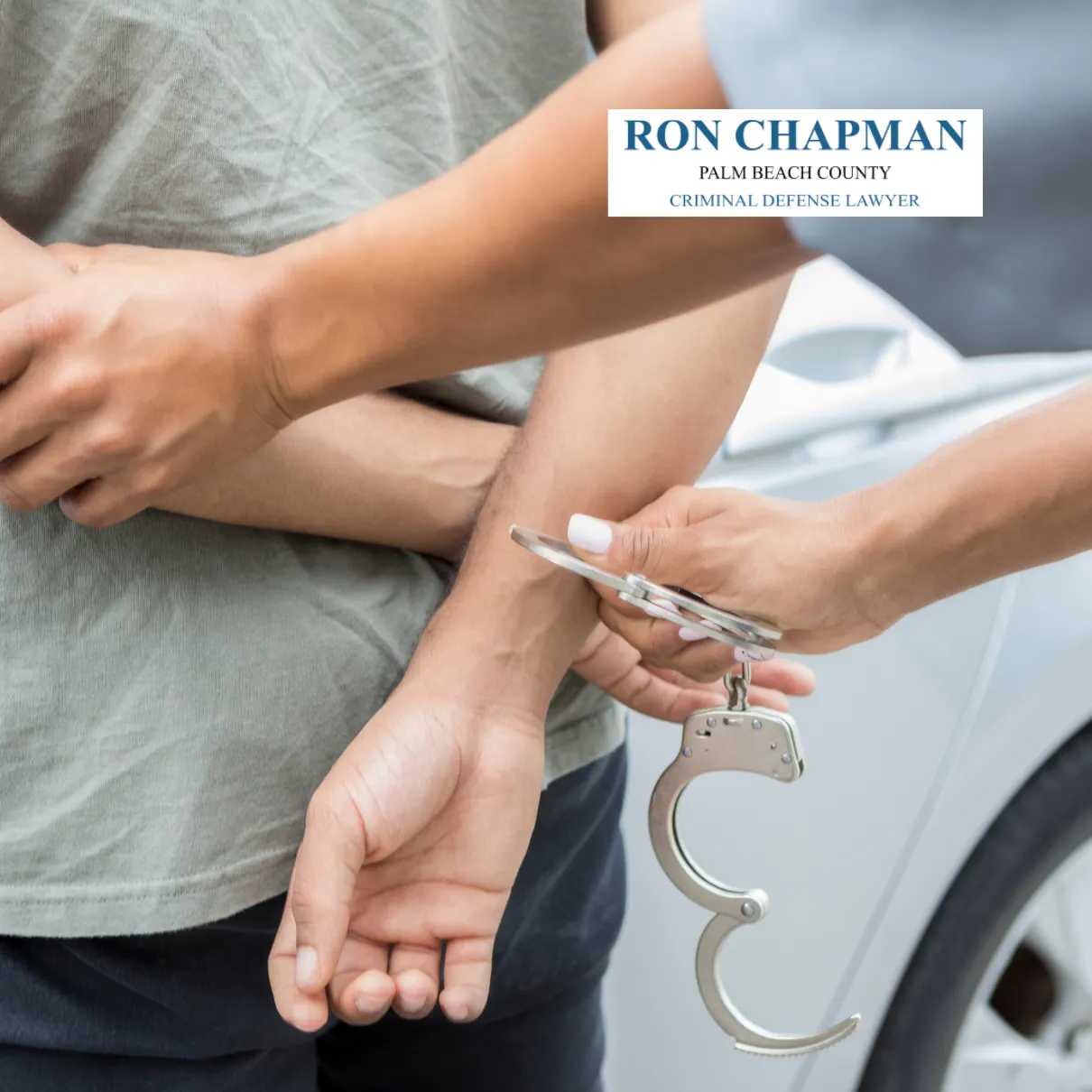




If you are arrested in Florida, do you have to have a trial?

If you are arrested in Florida, do you have to have a trial in order to resolve your case?  I am sometimes asked this question by clients who are understandably nervous about the prospect of having their case decided by a group of jurors who will be complete strangers to them.  My answer is typically no; a person who has been charged with committing a crime does not usually have to have a trial in order to resolve her case.    In the vast majority of cases that I handle, prosecutors make plea offers.  After speaking with my client, I will often present the prosecutor with a counter offer.  During the course of this ongoing give and take, an agreement is usually reached whereby the client resolves his case without having to go to trial. 

However, there are those rare cases where a prosecutor refuses to make any plea offer at all.  This is usually because of the serious nature of the charge--for example, murder or kidnapping.  In those cases, the client has to make a decision about whether he wants to have a trial or whether he wants to enter a plea "straight up" to the judge.  Either decision carries its own risks.

In other instances, the client adamantly maintains her innocence and demands a trial by judge or jury.  This decision is exclusively the client's but one which should be made only after carefully reviewing the prosecutor's evidence and any evidence which the client herself may wish to present at trial.


Florida criminal lawyer Ronald Chapman has been representing people accused of committing crimes since 1990. You can read more about Mr. Chapman’s experience as a Florida criminal attorney as well as review news articles about some of his cases.  Some of the types of cases and issues that Mr. Chapman has handled since 1990 include:


Death Penalty Cases
Assault and Battery Cases
DUI Cases
Drug Cases
Sex Crimes Cases
Sealing & Expunging Criminal Records
Bond|Bail
Mistaken Identification and Wrongful Conviction
Police Interrogations
Sentencing

Getting Your Florida Criminal Record Sealed May Not Solve Your Problem

 I frequently receive telephone calls from people stating that they need to get their Florida criminal record sealed or expunged because it keeps rearing its ugly head whenever they apply for jobs.  I ask them what type of work they do because some jobs require that they disclose their criminal record even though it has been sealed or expunged.  For instance, if the person is trying to get hired by a criminal justice agency or is attempting to be admitted to the Florida Bar, she is required to report her criminal even if her record has been sealed or expunged.  The same is true in some situations for  individuals who hope to work in Florida with children, the developmentally disabled, or the elderly.  (If you would like to learn more about the effects of expunging a Florida criminal record, take a look at Florida Statute section 943.0585(4).)  The point is that even if your are legally eligible to get Florida criminal record sealed or expunged, getting your Florida record sealed or expunged may not help you much if you work in certain types of occupations.


Florida criminal lawyer Ronald Chapman has extensive experience in helping people get their criminal records sealed. You can read more about Mr. Chapman’s experience as well as review news articles about some of his cases.  Some of the types of cases and issues that Mr. Chapman has handled since 1990 include:


Death Penalty Cases
Assault and Battery Cases
DUI Cases
Drug Cases
Sex Crimes Cases
Sealing & Expunging Criminal Records
Bond|Bail
Mistaken Identification and Wrongful Conviction
Police Interrogations
Sentencing

How to Get Your Criminal Record Sealed in Florida

I often get phone calls from people asking me if they can get their criminal record sealed or expunged in Florida because they are having trouble getting a job once their potential employer finds out about their record.  In order for me answer their question, I first have to get some information from them such as whether they were adjudicated guilty of the Florida criminal charge that they are calling about.  If the answer is yes, then they cannot get their Florida criminal record sealed or expunged.  If the answer is no, then I ask them whether they have ever before had a criminal record sealed or expunged.  If the answer is yes, then they cannot get their Florida record sealed or expunged.  If the answer is no, they I ask them whether they currently have a motion to seal or expunge their record pending in any court anywhere.  If the answer is yes, then they cannot get their Florida record sealed or expunged.  If the answer is no, then they may be eligible to have their Florida criminal record sealed or expunged.  As you can see, the rules for getting a criminal record sealed or expunged in Florida are quite stringent.  If you wish to review for yourself the rules regarding sealing or expunging your record, read Florida Statute Section 943.0585.  If you think you are eligible to get your Florida record sealed or expunged and you wish to have that done, contact an experienced Florida sealing record lawyer so that he or she can file the necessary paperwork to get your record sealed or expunged.

Florida criminal lawyer Ronald Chapman has extensive experience helping people get their criminal records sealed. You can read more about Mr. Chapman’s experience as well as review news articles about some of his cases.  Some of the types of cases and issues that Mr. Chapman has handled since 1990 include:


Death Penalty Cases
Assault and Battery Cases
DUI Cases
Drug Cases
Sex Crimes Cases
Sealing & Expunging Criminal Records
Bond|Bail
Mistaken Identification and Wrongful Conviction
Police Interrogations
Sentencing

When Can You Bond Out of Jail in Florida?

I sometimes get a frantic phone call from a wife or mother stating that one of her family members has just been arrested and asking whether her loved one will be able to bond out of jail.  I ask what charge the loved one was arrested for.  If the charge is a crime of violence listed in the Palm Beach County bond schedule, then the loved one will have to remain in jail until he or she goes to a first-appearance hearing which is typically held within 24 hours of the person being arrested.  At that hearing, a judge will determine whether the arresting officer had probable cause to arrest the person and what amount bond is to be set at (assuming that the judge found probable cause to exist).  Before October 1, 2006, just one bond was set even if a person was arrested on several different counts.  However, since that date, a judge at first appearance is required to set a bond for each specific count.  Thus, if a person was, for example, arrested for 5 counts of grand theft prior to October 1, 2006, a judge might have set one bond in the amount of $10,000 to cover all 5 counts.  But since October 1, a judge might set bond at $5,000 for each count which would result in the arrested person having a total bond of $25,000.  The result has been the setting of some ridiculously-high bonds.  I have even heard some prosecutors question whether such a system does not at times result in unreasonably high bonds.


Florida criminal lawyer Ronald Chapman has been representing people accused of committing crimes since 1990. You can read more about Mr. Chapman’s experience as a Florida criminal attorney as well as review news articles about some of his cases. Some of the types of cases and issues that Mr. Chapman has handled since 1990 include:


Death Penalty Cases
Assault and Battery Cases
DUI Cases
Drug Cases
Sex Crimes Cases
Sealing & Expunging Criminal Records
Bond|Bail
Mistaken Identification and Wrongful Conviction
Police Interrogations
Sentencing

Disparity in Sentencing and Crack Cocaine

In a previous blog posting, I argued for rationality in sentencing given the widespread problem of prisoner overcrowding in the United States generally and in Florida particularly.  After publishing that posting, I came upon an article that appears on the National Association of Criminal Defense Lawyers' website.  That article points out the disparity in sentencing between those convicted of crack cocaine offenses versus those convicted of powder cocaine offenses has been well known for years.  The U.S. Supreme Court recently heard oral arguments in a case that dealt with this disparity.  Will the high court do anything to correct this unjust disparity in sentencing?  We can only hope.

Florida drug offense attorney Ronald Chapman has been representing people accused of committing drug crimes in Florida since 1990. You can read more about Mr. Chapman’s experience as a Florida drug offense lawyer as well as review news articles about some of his cases.  Some of the types of cases and issues that Mr. Chapman has handled include:

Death Penalty Cases
Assault and Battery Cases
DUI Cases
Drug Cases
Sex Cases
Sealing & Expunging Criminal Records
Bond|Bail
Mistaken Identification and Wrongful Conviction
Police Interrogations
Sentencing

Prisoner Overcrowding in Florida

Time Magazine

These days, judges are handing out prison time like it's candy.  I have personal knowledge of one case in which a person was convicted of kidnapping his girlfriend and then sentenced to life in prison even though the victim told the judge that she only wanted her boyfriend to be sentenced to ten years in prison.  A few weeks ago in Stuart, Florida, a man in his early twenties was sentenced to fifty years in prison for burglarizing his girlfriend's home and hitting her in the process.  Why do I, as a Florida taxpayer, have to support such men for the rest of their lives when they should be out working and supporting themselves?  Neither of the two men mentioned above committed a crime deserving of such harsh sentences, and undoubtedly Florida's prisons contain many other such examples of men who are spending far more time in prison than they deserve for the crimes they committed.  While it's certainly proper to punish wrongdoers, let's bring some rationality to the table when doling out such punishment.


Florida criminal defense lawyer Ronald Chapman has been representing people accused of committing crimes in Florida since 1990.  You can read more about Mr. Chapman’s experience as a Florida criminal defense attorney as well as review news articles about some of his cases.  Some of the types of cases and issues that Mr. Chapman has handled since 1990 include:


Death Penalty Cases
Assault and Battery Cases
DUI Cases
Drug Cases
Sex Crimes Cases
Sealing & Expunging Criminal Records
Bond|Bail
Mistaken Identification and Wrongful Conviction
Police Interrogations
Sentencing

Dunbar Village Suspects Give Police Still More Evidence

As if confessions and DNA weren't enough evidence in the Dunbar Village rape case, it has now come to light that the police have seized letters from one of the incarcerated suspects and that a  telephone conversation of that same suspect was secretly tape-recorded by the police.  It is because of costly mistakes like this that people who are accused of committing crimes should be extremely careful to discuss their case only with their lawyer and his or her investigator.  Because such conversations are protected by the attorney-client privilege and work-product rule, it is difficult if not impossible for the police or prosecutor to become privy to such conversations.  However, if a person charged with a crime discusses his case with his parents or siblings, those individuals can be subpoenaed by the prosecutor to testify about what was said during those discussions.  Also, telephone conversations made by jail inmates are routinely recorded and used as evidence in court.  The lesson to be learned is that f you have been formally accused of committing a crime or are simply a suspect, don't discuss your case with anyone except your lawyer.


Florida criminal lawyer Ronald Chapman has been representing people accused of committing crimes since 1990. You can read more about Mr. Chapman’s experience as a Florida criminal attorney as well as review news articles about some of his cases. Some of the types of cases and issues that Mr. Chapman has handled since 1990 include:


Death Penalty Cases
Assault and Battery Cases
DUI Cases
Drug Cases
Sex Crimes Cases
Sealing & Expunging Criminal Records
Bond|Bail
Mistaken Identification and Wrongful Conviction
Police Interrogations
Sentencing

Reasons Why We Shouldn't Have a Death Penalty

A few years ago, the Governor of Illinois imposed a moratorium on the death penalty in that state because of his well-founded fear that wrongfully-convicted people might be executed.  Then, just last month, the American Bar Association issued a report in which it identified numerous problems with Ohio's existing death-penalty scheme.  No doubt many of those same problems exist in other states' death penalty systems as well.  And now, the United States Supreme Court has decided to hear oral arguments regarding the issue of whether lethal injection constitutes cruel and unusual punishment.  (To learn more about this important case, go to the website for the National Association of Criminal Defense Lawyers.)

When will we as a nation realize that the death-penalty system that currently exists in 37 states and in the federal judicial system is fatally flawed and needs to be discarded once and for all?  Why not have a system of justice in which individuals who are convicted of first-degree murder are sentenced to spend the rest of their lives in prison with no possibility of early release?  Wouldn't that system be far less expensive than the one we have now?  And wouldn't that system bring finality to cases much more quickly than the current system in which death-penalty appeals often go on for years?  Fortunately, the Innocence Project has uncovered many wrongful convictions thanks to DNA evidence.  But how many wrongful convictions will never be discovered because no DNA evidence exists in those cases?  Isn't it possible (if not likely) that some of those wrongfully-convicted individuals are currently located on death row awaiting their execution?  It's time that we abolish the death penalty in this country once and for all and establish instead a just system of punishment in capital cases.


Florida criminal lawyer  Ronald Chapman has been representing people accused of committing crimes in Florida since 1990. You can read more about Mr. Chapman’s experience as a Florida criminal attorney as well as review news articles about some of his cases.  Some of the types of cases and issues that Mr. Chapman has handled since 1990 include:


Death Penalty Cases
Assault and Battery Cases
DUI Cases
Drug Cases
Sex Crimes Cases
Sealing & Expunging Criminal Records
Bond|Bail
Mistaken Identification and Wrongful Conviction
Police Interrogations
Sentencing

DUI Lab Mistakes Cost Innocent People Plenty

This is the problem with breath-testing machines in Florida DUI cases:  a couple of numbers are spit out of a machine that very few people understand.  Those numbers say that the person arrested was driving with a breath-alcohol level that was over the legal limit.  Those numbers are, in turn, presented to a jury who view them as being absolute scientific fact.  But as several cases in the state of Washington demonstrate, DUI breath-testing machines are not infallible.  The following story appeared at seattlepi.com on October 3, 2007:

"DUI lab mix-ups finally get day in court:  Licenses already returned to dozens of suspect drivers"

By JENNIFER LANGSTON AND VANESSA HO
P-I REPORTERS 

Defense attorneys will start arguing next week to dismiss hundreds of drunken-driving cases across Washington based on what they allege is a pattern of misconduct and incompetence at the state toxicology lab.

Already, 36 people arrested on suspicion of DUI had their licenses reinstated last month, after several Department of Licensing hearing examiners expressed a lack of confidence in the Seattle lab's test results.

One examiner allowed a 49-year-old Puyallup man to keep his license, despite a second DUI arrest five days before his hearing. A 50-year-old Yakima County woman with a prior DUI also got to keep driving.

Continue Reading...

Florida Assault and Battery Lawyer Answers Your Questions

One thing is certain:  when the police are called to an assault and battery in Florida, someone is going to get arrested, and it's almost always the man.  When that happens, I often receive a frantic phone call from a wife or girlfriend saying that she didn't intend for her husband or boyfriend to go to jail when she called 911.  She only wanted the police to come and help calm the situation.  Although things seem desperate at this point, there is still much that can be done by an assault and battery lawyer to help improve the situation for both the man and the woman.  If the man has never been arrested before for assault and battery, the woman has the option of completing an affidavit which tells the entire story (rather than the shortened and slanted version which appears in the police report) and which asks the prosecutor's office to not file charges.  That affidavit can then be sent to the prosecutor's office so that the prosecutor who is handling the case knows more about the case than just what is contained in the police report, and it lets the prosecutor know that the wife or girlfriend does not want charges to be filed.  In short, there is often much that a Florida assault and battery attorney can do to help out a client who has been arrested for assault and battery in Florida.


Florida assault and battery attorney Ronald Chapman has been representing people accused of committing assault and battery in Florida since 1990. You can read more about Mr. Chapman’s experience as a Florida assault and battery lawyer as well as review news articles about some of his cases.  Some of the types of cases and issues that Mr. Chapman has handled include:

Death Penalty Cases
Assault and Battery Cases
DUI Cases
Drug Cases
Sex Crimes Cases
Sealing & Expunging Criminal Records
Bond|Bail
Mistaken Identification and Wrongful Conviction
Police Interrogations
Sentencing 

10 Things to Look for (and Avoid) when Hiring a Florida Criminal Attorney

There are many things to consider when hiring a Florida criminal attorney. The following is a list of some (but by no means all) of the things that you should consider when hiring a criminal lawyer in the State of Florida:

  1.  Be certain that the attorney you intend to hire actually handles criminal cases. Don’t hire your divorce lawyer or the lawyer who drew up your will to handle your criminal case. You wouldn’t hire a brain surgeon to operate on your heart would you? Because criminal defense is a specialized field of law, you need to hire a lawyer who specializes in this particular field.
     
  2. Be certain that the Florida criminal lawyer you intend to hire handles the particular type of criminal case that you have. If you are charged with murder, don’t hire a lawyer who does only drunk-driving cases. Find a lawyer instead who has experience handling murder cases. Or if you are charged with a federal crime, don’t hire a Florida lawyer who handles crimes only in state court. Find a lawyer instead who has experience handling federal cases.
     
  3. Be certain that the Florida criminal lawyer you intend to hire has a lot of experience handling your particular type of case. For example, even if the lawyer you intend to hire handles nothing but drunk-driving cases, did he or she graduate from law school three months ago and therefore has very little actual experience handling such cases?
     
  4. Avoid hiring a Florida criminal attorney who promises you a specific outcome. It is impossible for a lawyer whom you have just met and who knows nothing about your case except what you have told him to tell you how your case will turn out with any degree of certainty.
     
  5. If your goal is to resolve your case without a trial, you may not need to hire the best criminal trial lawyer in town. You may want to look instead for someone who has experience successfully negotiating your particular type of criminal case. On the other hand, if you definitely want to have a trial, be sure that the Florida criminal attorney you hire has significant experience trying cases and is not simply an “office” lawyer.
     
  6. If you are hiring a specific Florida criminal lawyer to work on your case, make sure that that specific lawyer and not one of her associates is the lawyer who will actually be working on your case and going to court with you.
     
  7. Hire a Florida criminal attorney whom you feel comfortable working with after meeting him and discussing your case. Don’t hire a lawyer who is pressuring you to go to trial if your goal is to strike a satisfactory deal with the prosecutor as soon as possible. On the other hand, don’t hire a lawyer who is pressuring you to take a plea bargain if what you really want is a trial.
     
  8. Be sure that the Florida criminal lawyer you intend to hire has time to work on your case. If the lawyer you intend to hire is starting a month-long federal trial next week, he may not be the criminal lawyer best suited to represent you if your case requires a lot of work and your trial date is fast approaching.
     
  9. Be certain that the Florida criminal attorney you intend to hire has a support staff that can adequately handle your case. Does the lawyer have, for example, a secretary, an investigator, a paralegal, and access to expert witnesses that may be needed in order to properly represent you at trial? If not, you may want to look for another lawyer.
     
  10. If the Florida criminal lawyer you intend to hire is quoting you a fee that is a lot more or a lot less than the going rate, ask yourself why. If the fee being quoted is a lot more than the going rate, is it because the lawyer is that much better than her competitors? If she is not that much better, than why should you pay that fee? On the other hand, if the fee being quoted is a lot less than the going rate, is it because the lawyer is just starting out and has little experience handling your particular type of criminal case? If so, you may want to look for another lawyer.

Ronald Chapman has been representing people accused of committing crimes in the State of Florida since 1990. You can read more about Mr. Chapman’s experience as a Florida criminal attorney, his services, and news articles about some of his cases on his blog at JusticeFlorida.com